Google Collaborates with African Universities to Introduce WAXAL, a Comprehensive African Language Dataset

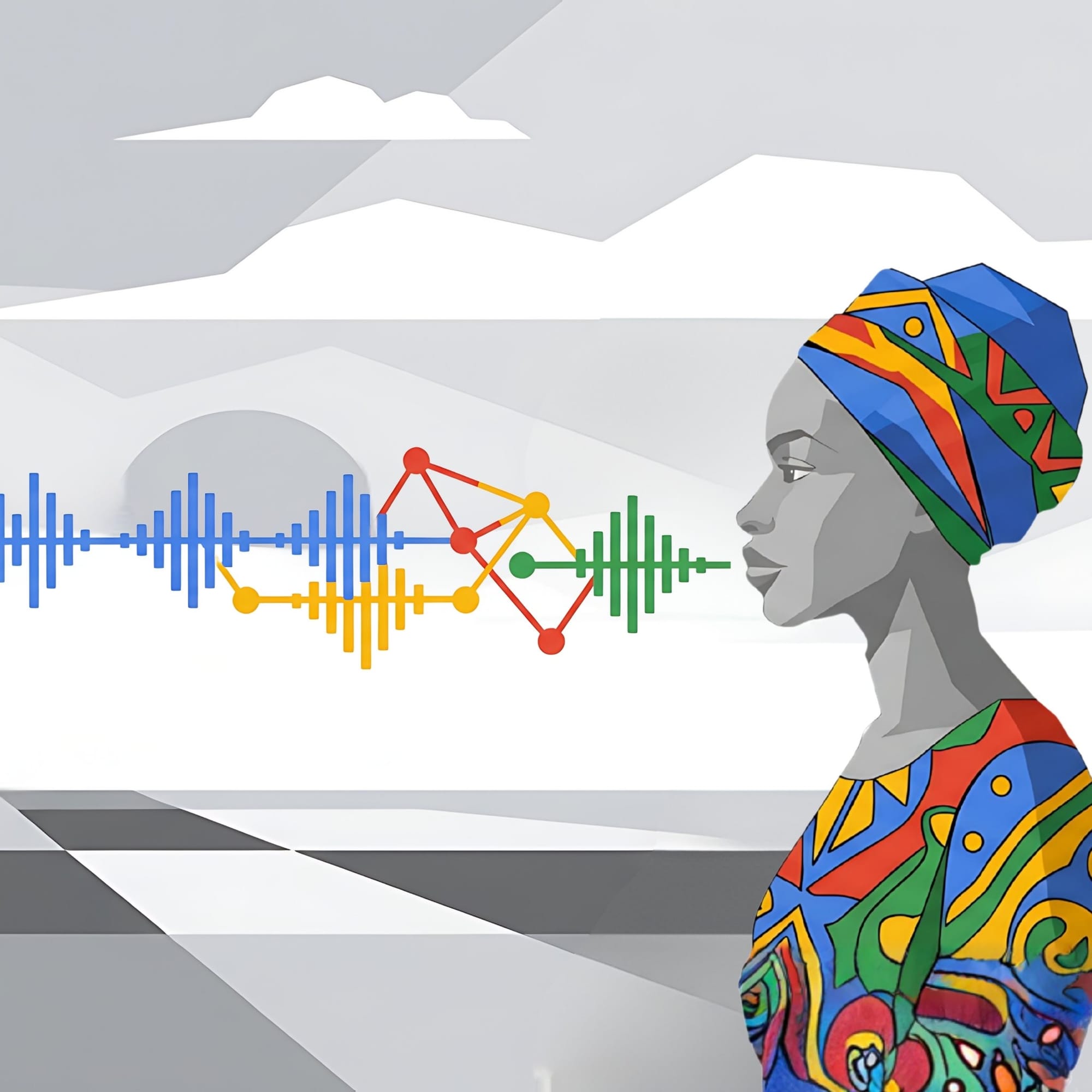
Google has decided to team up with a number of African Universities to introduce WAXAL, as an innovation to help African languages in artificial intelligence and natural language processing technologies as a groundbreaking dataset. This program seeks to close the gap in AI capabilities since there are some African languages that have historically been under-represented in global datasets.
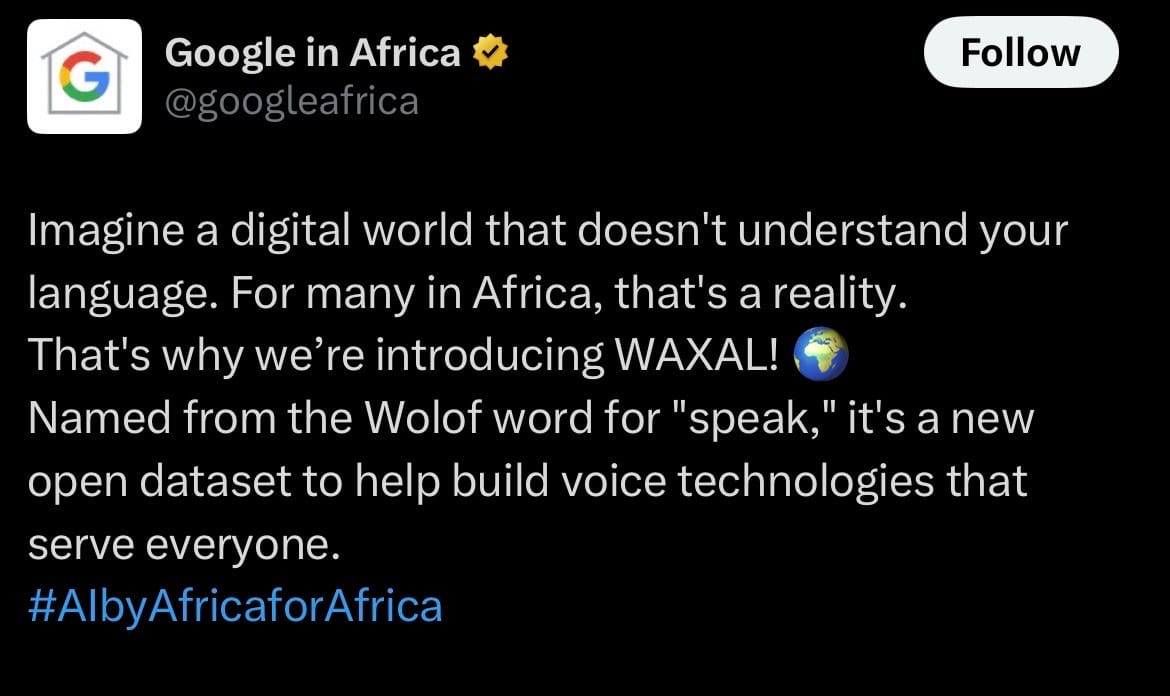
WAXAL is a large-scale, open speech dataset covering 21 African languages, including Hausa, Yoruba, Igbo, Luganda, and Acholi. According to its structure, it has a dataset which comprises 1,250 hours of transcribed natural speech and 20+ hours of studio-quality recordings, enabling the creation of high-fidelity synthetic voices.
Why Now?
Google explained that African languages have been underrepresented in digital tools and AI systems in previous years, which resist access to voice-enabled technology like speech-to-text services, virtual assistants, and translation applications. In order to enable Africans to engage with technology in their native tongues, Google and its academic partners hope to modify that perception with WAXAL.
Worldwide developers, academics, and innovators will have unlimited access to WAXAL. Voice assistants, educational materials, healthcare communication systems, and translation services are just a few of its uses.
The introduction of WAXAL represents an evolution in how African languages are represented in international technology. In addition to creating a dataset, Google is helping to lay the foundation for a more equitable digital future by working with African communities and universities.