OPay Launches Shield Pay, an Escrow Feature for Nigerian Online Shoppers
Both parties have 48 hours to submit evidence, after which OPay reviews the case and makes a decision.
 Written by Caleb Olu-Akin
2 min read
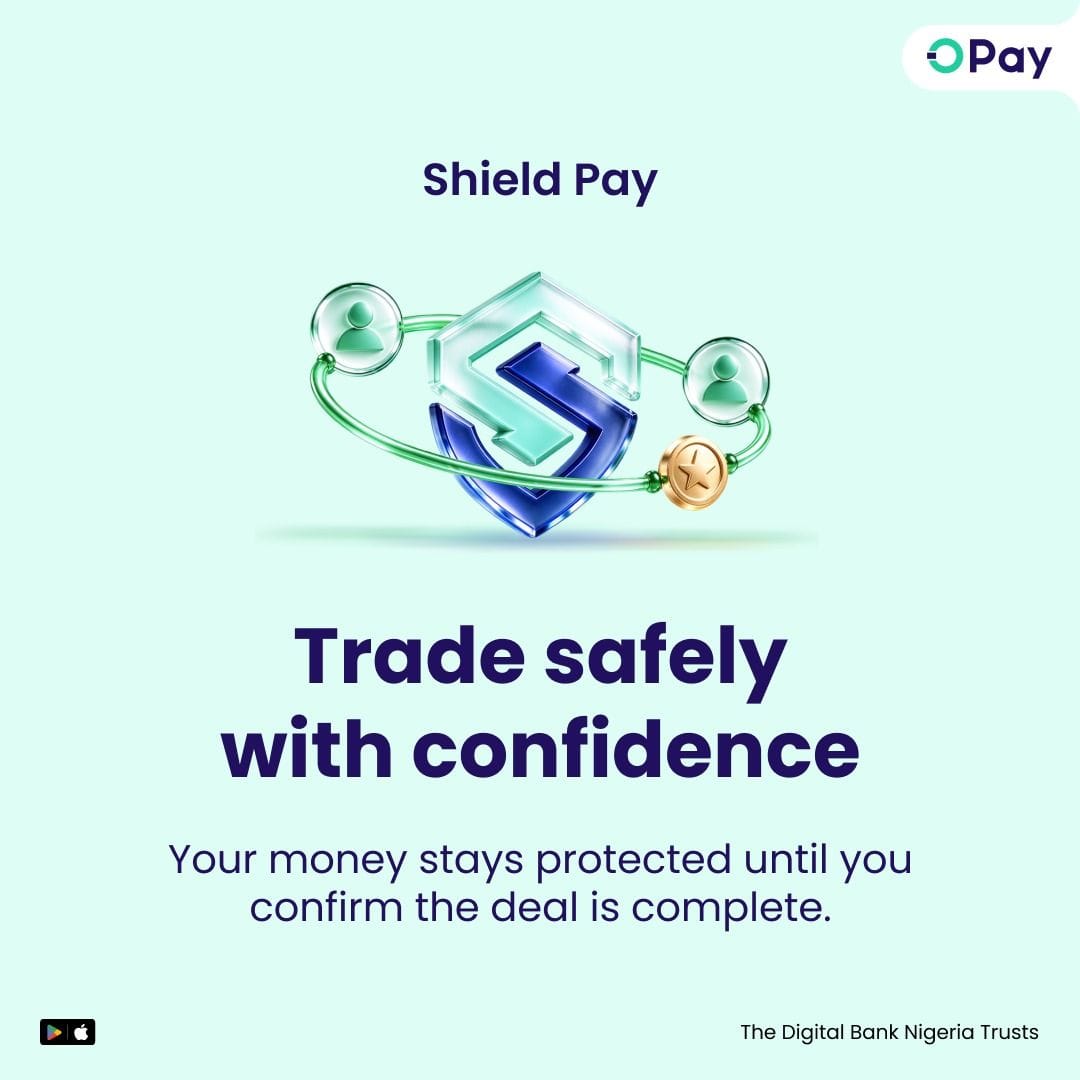
OPay has rolled out Shield Pay (an escrow-style payment feature that holds the buyer's funds until the seller delivers) on its Nigerian app.
Why it matters: Much online shopping in Nigeria still relies on trust (you pay the vendor and wait). Shield Pay puts OPay in the middle, holding the payment until the terms of the sale have been fulfilled, according to the company's description, as published by Legit.ng and the New Telegraph.
Where it stands: OPay announced Shield Pay on Nov 10 and began rolling it out to invited users on Nov 16. No date has yet been set for full public launch.
How OPay Shield Pay works, according to Legit.ng and New Telegraph:
- Both the buyer (the "Payer") and the seller (the "Payee") will need OPay accounts.
- Buyers can look up a vendor by phone number or OPay account details and check the vendor's 'trust level' and reviews. The company's description does not mention how the trust level is calculated.
- The two sides are in agreement on the amount, what the payment is for, and when the deal is due to be completed. The seller puts in the payment request, and the buyer has 24 hours to pay.
- OPay holds the funds rather than sending them directly to the seller.
- After delivery, the seller provides proof. The buyer has 7 days to review it and confirm, and can, of course, extend that once by a further 7 days.
- When the buyer confirms, OPay will release the funds. The seller can then withdraw the funds to their OPay wallet at no additional charge, provided no dispute has been raised.
If a deal goes wrong (buyer doesn't deliver, delivers late, supplies something that's not as per the agreed terms, scams or misleads them), the buyer can raise a dispute. Both parties have 48 hours to submit evidence, after which OPay reviews the case and makes a decision. The buyer has up to 15 days after they've confirmed to raise a dispute if they later find the terms weren't met.
Yes, but:
- Shield Pay only works between two OPay users. A seller who banks elsewhere cannot take payment via it.
- OPay has not published any fees beyond the free wallet withdrawal, nor have they published how long disputes take to resolve or how they assess the evidence.
- Sellers remain responsible for fulfilling the orders, and the feature in no way guarantees the quality of the product or acts as a delivery service.
- Holding on to the money until the buyer has confirmed could be a cash flow issue for the small seller.
- The accounts of the flow are different. The buyer enters the amount and then confirms the transaction with a transaction PIN.
The big picture is that escrow isn't new in Nigeria. OPay is now adding buyer protection to a payments app people already use for day-to-day transfers.
OPay: Founded in 2018, the company is licensed by the Central Bank of Nigeria and is insured by the Nigeria Deposit Insurance Corporation (NDIC), according to the company's website.
Northline Cloud for Founders. Run your AI product on dedicated GPU capacity, with an architecture review in your first month.
Learn more